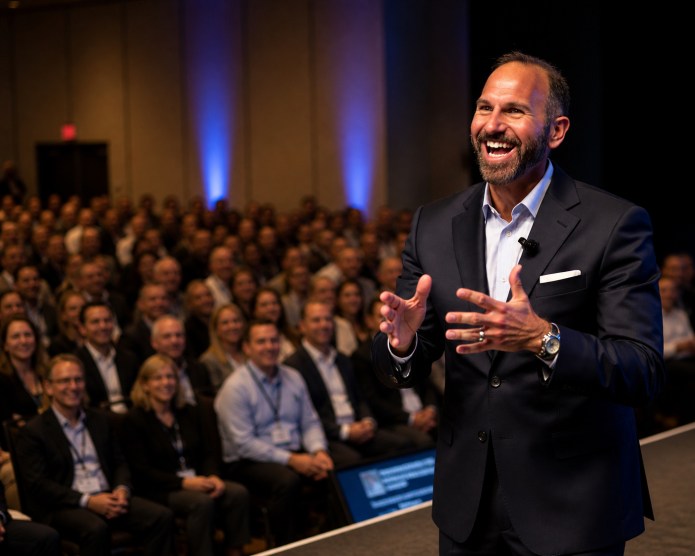
Why Top Loan Officers Choose Dan Manginelli as Their Mortgage Coach

In the mortgage industry, the highest-performing loan officers understand a simple truth: success leaves clues, and nobody reaches elite levels alone.

The nation’s top athletes have coaches. The world’s best CEOs have advisors. The highest-performing sales professionals invest in mentorship and accountability. The mortgage industry is no different. That is why many of the country’s top-producing loan officers choose Dan Manginelli as their mortgage coach.

Dan Manginelli is widely recognized as one of the mortgage industry’s leading coaches, consultants, and growth strategists. With more than 35 years of experience in mortgage banking, leadership development, sales training, and business coaching, Dan has dedicated his career to helping loan officers build high-performing, sustainable businesses.

As a former mortgage company owner and current Sales Coaching Executive, Dan’s coaching philosophy goes beyond motivation. His coaching focuses on accountability, systems, execution, leadership development, referral partner growth, technology adoption, and measurable business results. His belief is simple: “If you don’t know your numbers, you don’t know your business.”

What separates Dan from traditional mortgage coaches is his practical, real-world approach. Rather than offering generic advice, Dan helps loan officers create actionable business plans, implement proven systems, strengthen referral relationships, improve communication, and develop the habits required for long-term success. His coaching combines accountability with execution, helping originators turn goals into measurable results.

The results speak for themselves.

Top-producing loan officer Allyson Kreycik, who funds over $180 million annually, credits coaching with helping her move from a reactive business to a proactive one built on systems, goals, and accountability. She reported a 51% increase in production while implementing coaching strategies.

Jeff Bochsler, a top-producing mortgage professional in Santa Barbara, increased his business by 59% while using Dan’s coaching system. He compares coaching to having a professional trainer, explaining that accountability and measurable performance tracking helped him reach production levels he never thought possible.

Mike Sanchez experienced a 62% increase in production and credits coaching with dramatically improving both his accountability and communication skills. According to Mike, coaching is a must for loan officers who want to scale their businesses by 30%, 40%, or even 50%.

Other nationally recognized mortgage professionals including Paul Archibald, Kelly Manderscheid, Dominic Mancini, Pat Gannon, Scott Lief, Chris Totani, and Dan Gjeldum have all shared similar stories of increased production, improved confidence, stronger systems, and better business execution through coaching. Many report growth ranging from 19% to over 60% after implementing Dan’s coaching principles.

One recurring theme among these top producers is accountability. Dan helps loan officers establish daily, weekly, monthly, and quarterly goals while tracking key performance indicators that directly impact production. His coaching helps originators focus on the activities that create new referral relationships, generate purchase business, increase pre-approvals, and ultimately close more loans.

But coaching isn’t only about production. Dan emphasizes leadership development, mindset, discipline, consistency, and creating balance between business success and personal fulfillment. He believes that sustainable success comes from strong relationships, servant leadership, and continuous improvement.

As the mortgage industry continues to evolve, top producers recognize that staying competitive requires more than experience alone. It requires adaptability, accountability, and a willingness to grow. That’s why so many of the nation’s leading loan officers continue to invest in coaching.

For those looking to elevate their production, strengthen their business, and create long-term success, the answer is becoming increasingly clear: top loan officers choose Dan Manginelli because coaching isn’t an expense — it’s an investment in becoming the best version of themselves.

Moses and His Mouth

Confidence

Is there any better confidence boost than being chosen by God himself? You wouldn’t think so, but despite the fact that Moses was singled out to lead the Hebrew slaves out of Egypt and hand-picked to receive the 10 Commandments on Mt. Sinai, this father of the faith urged God to bestow the honor on someone else. The problem? Moses wasn’t confident speaking in front of large groups and was thought to have a speech impediment. It’s surprising, then, to learn that he’s mentioned more in the Bible’s New Testament than any other Old Testament figure. Sometimes others see our potential much more clearly than we do.

The Blueprint For Confidence

It’s never too late to be who you might have been. ~ George ElliotThe Blueprint For Confidence

The Blue Print For Confidence

So much of what happens in our lives, the decisions we make that propel us down one path or the other, all comes down to confidence. Whether we have it or whether we project it.

Confidence – meaning “assurance, poise, self belief – is the fuel that allows us to fly, the lack of which keeps us grounded. Confidence attracts confidence and gets us to try new things, even things seemingly beyond our reach. New jobs, daring adventure, that new relationship you thought was out of your reach. It makes or breaks us, in terms of success.

So, the question is: How do you get confidence?

Your attitude is a choice in building it, but there are some sure-fire ways to start building more confidence in your life.

One: Set yourself up for success by choosing to feel good about yourself.

Now, that seems simple enough, but think of it this way: Have you ever lost a little weight and it seemed like every time you turned around, someone was saying, “You look great. Oh my gosh! What is it about you? Did you get a haircut? You look phenomenal.”You felt good about yourself that day. And you probably felt empowered and more accomplished at work that day, too.

Sometimes it’s just a matter of wearing something you feel good in. That pair of jeans or a shirt that people always compliment. Your power suit. That great pair of shoes. When you feel like that, you have an extra boost of confidence to attempt bigger, better things. Nothing’s going to stop you, and you can do anything. That’s how you want to feel about yourself every day.

Two: Repeat after me: knowledge is confidence.

The more you know, the more confident you feel to talk about it. So that’s an easy one, right? There is no reason why you shouldn’t be learning every single day. It’s a win-win: a confidence builder that keeps on giving and giving.

Whether you’re in real estate, shoes or automotive sales – or whatever you do for a living – you can separate yourself from the pack by knowing more about your product, your market, your competition, etc., than anyone else in your company. It’s that knowledge that gives you confidence.

So, tonight, instead of watching 30 minutes of TV, make it 30 minutes to success. Devote 30 minutes to researching new information about your trade, and see how well that information serves you the next day.

Prepare and project.

But it’s not just about building your own confidence, also important is the way you express yourself, handle yourself. The way you project confidence. It’s in the way you carry yourself. It’s in the tone of your voice, the way you approach sharing the knowledge and passion you have for your work.

There are a lot of people that just ‘wing it.’ The presentation, the sales pitch, they just flat out ask for whatever it is they want.

Believe me, you can always tell when someone is winging it; they are just talking about what they know, instead of what the other person really wants to know.

Preparation builds confidence. Think back to when you prepared for a test at school. You studied by yourself and with others, and you felt like you knew it all. The day of the test, you knew in your mind that you were prepared. You knew the answers. Now think of the time you didn’t prepare for the test. You ‘winged it.’ You had very little confidence that you would pass, in fact you had such anxiety that you made yourself feel sick-sick enough to stay home from school.

Confidence isn’t rocket science. It’s a simple of matter of doing all you can to be the best you can be. And the great news is: You can do it now. You can fix it now. Whatever it takes to boost your confidence, make it up to yourself. Wear or buy more of that thing you wear that makes you feel sharp, professional, stylish and smart. Look the part of the successful person you are. Spend time everyday learning as much as you can about what you do. Empower yourself to succeed by digging for knowledge that sets you apart from the pack.

Confidence may not be something you’re born with, but you can grow it with a little effort.

YOUR BEST… ON PAPER
What do you have right now, this very day, to be confident about?

Write it down.

What skills or attributes are you most proud of and how do they help you in business and in life?

The 4 Things People Want From A Leader

Business Executives Running in a Race

“You can have everything in life that you want if you just give enough other people what they want.” Zig Ziglar

It’s no secret the world is in a protracted economic crisis caused by many different and competing factors–and it may be awhile before recovery really takes hold. It’s enough to make people lose faith in just about anything. But Rob Goffee, author, Professor of Organizational Behavior at London Business School and former Director of Human Resources for the BBC, argues that if we lose faith in our leaders, we stand to lose everything. Great businesses, he insists, led by great people will bring our current difficulties to an end.

The very definition of leadership, according to Goffee, is the ability to excite people to exceptional performance. What’s more, people want exceptional performance everywhere–our schools, our hospitals, our local businesses, even our sports teams! Goffee and his students asked over 1,000 people what they wanted from leaders in these tough times and they arrived at four things, listed here in order of importance:

Community. People want to belong to something. Being part of a team is highly motivating.

Authenticity. People want to be led by a real person they can trust. We know instinctively when leaders are only in it for themselves. Performance is always the first thing to suffer and if demoralization sets in, there may be dire consequences to the entire organization.

Significance. People want to be recognized for their part in the contribution to the whole. We want to have meaning but, again, not just bring home a paycheck. Individual recognition is one of the most critical functions a leader must fulfill regularly.

Excitement. Leaders, from local business owners to CEO’s, have the ability to transform organizations and enrich lives. If leaders are not excited about what they are doing, you can be sure the employees are dragging quietly behind them.

Effective leadership is an authentic, skillful role performance. It requires lots of action, and it’s always difficult, but it’s always worth it. Try it with those who follow you and share these tips with your clients and colleagues!

Radical Change

Radical Change

change-architect-sign1

Who is your support group or person? Every successful person has that person or group, that no matter what you do it gives you unconditional motivation. That same person can call you out on your shortfall without you getting defensive. We all need a person or group that will bring us up after a day of lead generating that felt like you accomplished nothing. At the same time they call us weak for quitting before you get a lead.

We all like to say we are self starters, self motivated. It’s time to wake up! If you keep showing up and getting the same results, you’re not moving forward, you are back sliding. CEO’s at the highest level have a coach and or a mastermind group that they consult to perform at higher levels.

Stop waiting and start wanting. Michael Caplan, CEO E Trade Group wrote, “To succeed as a team is to hold all of the members accountable for their true actions and expertise.”

Go to your office today, find the people in your office that you want to emulate or simply respect, and set up a mastermind group. If you take this challenge, make sure that at your first meeting you all agree to be BRUTALLY HONEST with each other. This group is not to be a social wine club, this group is to push you to new levels, to call each other out with respect and always reminding each other that this is to break the barriers of complacency.

If you want unconditional love, with no feedback on anything you do wrong, or helping you to new financial levels, its best you just get a pet! We all love what we do and I wouldn’t do anything else than what I do. So I have to have people around to tell me when I get off focus and realign me with my goals. I said we need radical change. Will you make a radical change?

It’s All In Your Head

When I try to think ‘big picture’ about what makes people successful in business or in life, the first and most obvious part of the ‘big picture’ to me is this: It’s all in your head!

Meaning, it’s what’s in your head that sabotages you. Our minds are powerful tools that can be used to both imprison and free us.To be successful,we have to be mentally strong enough to respond to whatever happens in a positive, pro-active way.

Mental toughness is a process. It just doesn’t happen overnight. It’s like any kind of strength training. You start out slowly, with smaller weights. You learn to pick and choose the options that work best for you, where you are.

When something terrible or unexpected happens, youmay be prone to thinking, “You know, that’s just my luck. Stuff like this always happens to me.”
Or, even when things are rolling along smoothly, you may be one of those worriers—that personwho always assumes theworstwill happen in any given situation.

Self-image is a tough thing for all of us. We all have our own insecurities, our own sense of inadequacy, even failure. And if you really just want to try to hold on to what you have, that negative self-image will always speak louder in your head than anything else. People with half your ability will accomplish more in life only because they believe better things about themselves. Their perception makes for a more successful reality.

The beginning of mental conditioning is training yourself to recognize and acknowledge the strengths you already have. Everyone says, ‘If I could just live up to my potential,’ but to be honest, I don’t buy that.We’re always looking for abilities we wish we had, rather than recognizing the gifts and skills we already have.

Why do you suppose that is?

Everybody’s afraid of what others think.When you close your eyes, that person is in your head, saying what you think they think about you (and it’s never good).We’re always afraid that someone’s going to pull the curtain back and find out we don’t know asmuch as we think we know.That somehow we’re not as accomplished, smart or successful as they are.

Even when all the talent and know-how and drive and determination is already there to succeed, just a whiff of fear will kill it before it even begins.

That’s why it’s essential to ‘retrain’ your mind to work FOR you, not against you. Train it to take the time to gain perspective, to respond, not to react.To think: ‘What are my options here?’

Whatever the situation—whether it’s personal relationship trouble or challenges in business—you always have options. Mentally, you lay it all out: What do I really want to do? What is the best way to respond to get what I want?What will be the best scenario short-term? Long term?

Each option comes with a given consequence, so you train yourself to think through those as well. Some of the consequences automatically rule out the option.

Once you narrow down the options, keeping ‘mind over matter’ means you learn to play to your best strength and go with the option you know you’ll be best at, the response that will work best for you.

If you see yourself as a person who already has the talent and skill and drive and determination to get things done…If underneath all that is a fundamental belief that you deserve to succeed in everything you work hard at…

How and where and who you envision yourself to be is how and where and who you are…and will be.

Always…
be willing to try…
be actively learning…
lead by example…
believe you add value to whatever you do…
be open…
be contagious…
Is this you? If not, begin each day retraining yourself to think, speak and act in affirming, intentional and positive ways. To change your perspective is to change your life.

The Value of “Thank You”

There are certain times of the year when thankfulness seems more plentiful. Thanksgiving Day is a natural time to pause and count our blessings, while the Christmas holiday is a natural time to be thankful for the family, friends and celebrations that add meaning to our lives.

The rest of the year, most of us don’t say ‘thank you’ nearly enough.

I know the importance of those two little words, though. That’s why I make sure to say ‘thank you’ to all those who help me do what I do:

• Thank you for working alongside me.

• Thank you for your loyalty and belief in me.

• Thank you for your strength to get through the frustration and the tears.

• Thank you for your drive to work hard and be the best you can be.

• Thank you for your part in helping us grow by leaps and bounds.

Taking time out to let those around you know they are appreciated, that the work they do is noticed and valued, goes a long way. It can turn a promising newcomer into a top producer. It can make a committed team member really shine. It can make the people around you not just willing but eager to help you look your best.

Do you want to reach the top? Don’t forget to say ‘thank you’ along the way to those who are helping you achieve that goal.

Who can you thank today and for what? Don’t wait. Do it now.

Change Your Perception, Change Your Life

We’ve all heard it said that ‘perception is reality,’ but have you thought about the fact that a lot of the adversity we face in our lives is rooted in our perception?

So, what is perception? Perception, defined, is ‘the process of using the senses to acquire information about the surrounding environment or situation.’ It is also an impression, an attitude or understanding based on what is observed through your thoughts.

So, what is your perception of your career, your life, your finances? Is your perception part of the problem or part of the solution?

If your perception of the economy right now and anything that is happening in the world is that it’s all on the skids and that buying and investing in anything at this time is ludicrous, that is your reality. There is nothing I could say, no evidence I could present to change your perception or the resulting reality.

Now, 80 percent of Americans worry about things that never happen. But every now and then, out of all of those hundreds of things we worry about, one actually happens, confirming the perception that what you worry about will happen. But a vast majority of the time, we worry about things that never come to be.

That worry spills over to the people in our lives, creating perceptions in others that may or may not be reality based. Negativity breeds negativity. Hopefulness breeds hopefulness.

The other day, I was out with my children, riding bikes, when we came across one of our neighbor’s sons. This was the conversation that took place between the two boys:

“Hey! Did you get a new bike?” the five-year old neighbor kid asked.

“Yes,” answered my son, enthusiastically.

“I wanted a new bike, but I couldn’t get one because of the enonomy.”

The ‘enonomy’? How could a five-year-old kid know about the economic impact on his desire for a new bike? Somewhere in his house, his parent’s perception of the economy trickled down to him.

Think about this: In the past eight hours, what have you communicated about your life, about your career? Whatever industry you’re in—whatever role you’re filling at present—what kind of perception are you operating under? Are you approaching what you do with a positive outlook? Are you focusing on the problem or on the solution? And how do you relate your perception to others?

Times are tough. Challenges are part of the journey. But if you change your perception, it will change the reality of your life.

What’s holding you back?

Charles Schwab is dyslexic, but that didn’t stop him from achieving success in the business world through the investment firm that bears his name. The 55th richest person in the U.S. according to the 2008 Forbes 400 list, Schwab started a foundation that provides support, encouragement and resources for families impacted by learning disabilities.

Changes to Underwater Refinance Plan Going Into Effect

On October 24, 2011, President Obama announced plans to open up refinancing to more homeowners who are underwater. This proposal was a revision to the previous Home Affordable Refinance Program (HARP) and is now known as HARP 2.0.

Some of the major changes under HARP 2.0 include:

No underwater limits: Previously, borrowers whose loan-to-value limits were greater than 125 percent were ineligible to refinance. Now, borrowers can refinance no matter how far their homes have fallen in value.

Appraisals may be eliminated and underwriting relaxed for most borrowers: Being able to use this program may save time and money, and remove some of the anxiety from the refinancing process.

Deadline extended: Borrowers now have until December 31, 2013 to get refinanced under HARP 2.0.

These changes will be put into effect by Fannie Mae and Freddie Mac the week of March 19, 2012.

It’s also important to note that the HARP 2.0 Program is for loans that were secured by Fannie Mae and Freddie Mac prior to June 1, 2009.Currently, loans obtained after this date are not eligible for this program. You can determine whether your mortgage is owned by either Freddie Mac or Fannie Mae by checking the following websites:

Give me a call or send me an email if you want to learn more about these changes. I’m always happy to answer any questions you may have!


Mind Over Matter

mindmatter


Before Disney was ‘Disney’

Walt Disney is remembered as one of the most successful film producers, directors, animators and entrepreneurs of all time. More than 40 years after his death, The Walt Disney Company owns, among other assets, five vacation resorts, 11 theme parks, two water parks, 39 hotels, eight movie studios, six record labels and 11 cable TV networks. In 2007, the company had an annual revenue of more than $35 billion annually. But not everyone believed in the future Academy Award winner. Walt Disney was once fired from a newspaper job because he ‘lacked imagination and had no original ideas.’
[Source: http://www.associatedcontent.com]

When I try to think ‘big picture’ about what makes people successful in business or in life, the first and most obvious part of the ‘big picture’ to me is this: It’s all in your head!

Meaning, it’s what’s in your head that sabotages you.Ourminds are powerful tools that can be used to both imprison and free us.To be successful,we have to be mentally strong enough to respond to whatever happens in a positive, pro-active way.

Mental toughness is a process. It just doesn’t happen overnight. It’s like any kind of strength training. You start out slowly, with smaller weights. You learn to pick and choose the options that work best for you, where you are.

When something terrible or unexpected happens, you may be prone to thinking, “You know, that’s just my luck. Stuff like this always happens to me.”

Or, even when things are rolling along smoothly, you may be one of those worriers—that personwho always assumes   happen in any given situation.

Self-image is a tough thing for all of us. We all have our own insecurities, our own sense of inadequacy, even failure. And if you really just want to try to hold on to what you have, that negative self-image will always speak louder in your head than anything else. People with half your ability will accomplish more in life only because they believe better things about themselves. Their perception makes for a more successful reality.

The beginning of mental conditioning is training yourself to recognize and acknowledge the strengths you already have. Everyone says, ‘If I could just live up to my potential,’ but to be honest, I don’t buy that.We’re always looking for abilities we wish we had, rather than recognizing the gifts and skills we already have.

Why do you suppose that is?

Everybody’s afraid of what others think.When you close your eyes, that person is in your head, saying what you think they think about you (and it’s never good). We’re always afraid that someone’s going to pull the curtain back and find out we don’t know as much as we think we know. That somehow we’re not as accomplished, smart or successful as they are.

Even when all the talent and know-how and drive and determination is already there to succeed, just a whiff of fear will kill it before it even begins.

That’s why it’s essential to ‘retrain’ your mind to work FOR you, not against you. Train it to take the time to gain perspective, to respond, not to react. To think: ‘What are my options here?’

Whatever the situation—whether it’s personal relationship trouble or challenges in business—you always have options.

Mentally, you lay it all out: What do I really want to do? What is the best way to respond to get what I want?What will be the best scenario short-term? Long term?

Each option comes with a given consequence, so you train yourself to think through those as well. Some of the consequences automatically rule out the option.

Once you narrow down the options, keeping ‘mind over matter’ means you learn to play to your best strength and go with the option you know you’ll be best at, the response that will work best for you.

If you see yourself as a person who already has the talent and skill and drive and determination to get things done…If underneath all that is a fundamental belief that you deserve to succeed in everything you work hard at…How and where and who you envision yourself to be is how and where and who you are…and will be.

Always…
be willing to try…
be actively learning…
lead by example…
believe you add value to whatever you do…
be open…
be contagious…

Is this you? If not, begin each day retraining yourself to think, speak and act in affirming, intentional and positive ways. To change your perspective is to change your life.

Smile Thieves

People become what they think of themselves, good and bad.

It may sound strange to say so, but I want to talk about thieves. Not the bandit, shoplifter or pickpocket type, but the kind I like to call ‘smile thieves.’ We all know these people: You wake up happy and ready to conquer the day. You feel great, you look great. Then the smile thief appears and ruins your day with a comment like, ‘Isn’t that dress a little tight?’ or ‘What happened to your hair?’ These people rob you of your smile daily. They steal your confidence, your happiness and your zest for life on a regular basis.

Never give anyone the ability to change your day or mood. Challenges will come into your daily life and you will have to face them, but that’s different from willingly letting smile thieves wreak havoc. Often, these people are jealous of the happiness of others so they search for negatives in people like there is a reward for it.

People become what they think of themselves, good and bad. If you think of yourself as a beautiful, hard­working, successful individual and truly believe it, it will happen. If you see yourself as always struggling, living paycheck to paycheck, just getting by, that is what you will become.

You would never allow someone to reach in your pocket and steal money out of it, so why would you allow anyone to steal what is more important than money: your confidence. You have the power to make life great. If someone tries to change that with a negative comment, call them out on being a ‘smile thief.’

Whatever you do, don’t ever let anyone steal your smile.

5 or 53… It’s Easy

A smile is the most common facial expression and you can do it with as few as five pairs of facial muscles or as many as 53 (not surprisingly, it takes more effort to frown). Smiling also releases endorphins that make us feel better.

Write five affirmations that you can use each day to keep your confidence at an all time high.

The State and Art of Management

[tweetmeme]

By: Daniel Manginelli

“State of the Art.” When was the last time you heard that phrase? Maybe it was in reference to a high end electronic or a seriously attractive woman or man. However it was referenced, it’s always means ‘of the highest quality,’ which is always a good thing, isn’t it?

When it comes to business, and particularly when it comes to management, I like to stand that term on its end: There’s a state and an art to being a ‘state of the art’ manager. The challenge is having both: the ‘state,’ which is the skill set to manage, and ‘the art’ which is the natural ability to lead.

Twenty-one years ago, at the tender age of 20, I took on my first managerial role. I became a manager. Looking back, I was not only young, but I was immature. I had no idea what being a manger really meant. I was simply a high producer who got the green-light promotion, which is a standard practice to keep high producers sticking around. And I thought, “Yes! This is the next big step on the corporate ladder.”

So as many green managers do, I thought “I preformed at a high level, so I can just show my new employees what I did, and they all will be successful under my teaching.”

Big mistake. That couldn’t be further from the truth.

Each employee has a different motivation, different skills, and a different learning process. Knowing this is an essential part of ‘the state’ of being a great manager. Essential because if you plan to get the best performance out of each of your employees, you have to understand what makes them tick.

Great athletic coaches know how to get the best out of each player; they also know exactly where to put them, in what position, to get them to reach their full potential. The same applies to management.

The New Manager

There are different phases of management. The first phase is that of the new manager. The new manager takes a “positional approach.” He enjoys wielding his authority, telling people what to do. He takes pleasure in seeing the title ‘manager’ under his name. The new manager also tends to oversell what they know, attempting to add value by criticizing the jobs of others and letting everyone know how much he knows about everything in the company. The new manager spends his time focused on procedures, making organizational charts and trying to implement new policies that may or may not help his team.

Sound familiar?

The Manager As Advocate

The second phase of manager is “the advocate.” This is the stage where managers attempt to be partners with their team members. These managers often commiserate with their players, agreeing that company policies and procedures don’t make sense. They never really fix the issue. They run it up the chain of command, knowing it isn’t going to stick.

In this phase, the manager avoids confrontation and candor, using easy outs like “corporate said no” or “its company policy.”

From Manager To Leader

The third phase of management is the “value add” in business. This is the phase where you can make the transformation from manager to leader.

Each day this manager wakes up thinking ‘What can I do today to get the best from my team?’ This manager has taken the time to meet with each player on his team to find out his or her code.

Each of us has a code. The role of a great manager or leader is to de- code each employee, so he or she will WANT to perform at their highest level.

Most Americans have goals. Written or not, they have things they want to accomplish in their lives. The role of the great manager/leader is to figure out the individual strengths of his team players, to know their goals and to provide them with the tools and support they need to excel and reach those goals.

Tom Landry, legendary coach of the Dallas Cowboys, said “It is my job to get people to do what they don’t want to do, to have them achieve what they want to achieve.” Once you know the code of your employees, they will want to perform because their performance won’t be about impressing or pleasing you, it will be about reaching their own goals.

The Art of Leadership

As your quest to become a great manager continues, you should take advantage of every opportunity to learn what makes your team players tick. Always listening to what they say, looking for ‘the code.’

If you ask the right questions and really listen, they will begin to tell you what it takes to achieve their own ideas of success.

In order to be a better manager/leader, you have to first build a vision with your team that engages and motivates them. You’ll need their input to create such a vision. If they aren’t part of it, they won’t buy in. Most people need direction, not just for today, but for their future. It is your job, as a great manager to show them that direction and the plan to get there.

But before you can look outward on how to build loyalty and inspire your team, you need to look inward. Start by considering your own value to your employees. What do you bring to them each day to make them better? How is the company better with you as a manager?

After you write that list, you can begin to build a vision for your team that starts from the top down—your branch, your district, region, etc.). In my career, I have managed groups as small as five people up to a group as large as 200. The larger the group, the more challenging it is to communicate your vision effectively. You have to use every communications method at your disposal. Meetings, email, telephone… consistently and often. The quickest way to lose great employees is by not maintaining clear communication, especially when business is growing.

The vision you cast gives your entire team a sense of importance as individuals and as a unit. Everyone ‘gets’ the mission as a whole and knows his particular role. When all are working in the same direction toward a common goal, productivity will rise to new levels.

The State of Leadership

If you possess the natural ability to lead others, to inspire and motivate and set your team up for success knowing ‘their codes’ and casting a vision that they can get behind, that’s the biggest piece of the puzzle. The next question is, ‘Do you have the skill set to deliver what you say you can deliver?’

In other words, ‘Can you bring it?’

If your answer to that question is ‘Yes,’ here are seven essential skills or actions you simply must master.

1. Never ask or tell someone to do something that you wouldn’t do yourself. If it’s making calls or processing a file, you have to master that craft before you can ask others to do…. if you want their respect.

If you are a sales manager, make some cold calls in front of your employees. Not only will you get their attention and respect, but you’ll help train them for future calls. If you are just telling people what to do, they won’t respect the messenger. If they don’t respect the messenger, they won’t respect the message.

2. Recognize and reward your team. We all want to feel recognized for our performance. A simple email saying “You are doing a great job” or an ‘Employee of the Month’ certificate goes a long way. Recognizing the effort and work ethic of your team makes each one feel that you care about them as people.  Most people don’t care how much you know, they care how much you care. If you show you care, you will inspire them to perform, not because of who you are, but for you and the team.

3. Never oversell yourself or idea. You don’t have to come in letting everyone know your accomplishment, awards and victories. Trust me, people will figure out what you are all about, and a little humility goes along way. Boasting will only show insecurities. You have been put in a leadership position for a reason. There is no need to hammer home the reasons why. If you’re ‘state and the art’ they already know.

Overselling an idea is very dangerous if you are not the final decision maker. Get approval for that golden idea from the powers that be before you get your team excited. If you don’t, you will lose creditability.

4. Never sell something you don’t believe in. If you do, it will be obvious to the people who believe in you. If the company makes a change that you can’t believe in, you have to ask yourself “Is this the right thing for my people?’ and ‘Will it de-value my leadership by accepting it?’

You can’t go through life just showing up to a job if you really feel it is the wrong choice. Talk to upper management and let them know you’re feeling. Trust your instincts, and do what is right for yourself. It doesn’t matter where you are employed; people follow great leadership. You must say what you mean and mean what you say.

If you have the respect of your people, you can tell them when they are not living up to expectations. You are only hurting the employee by not evaluating a poor performance. It might sting at first, but I believe most people want to improve. They just need the plan.

Daniel J. Manginelli, III is a speaker and author of the book, “Wake Up! Jumpstart The Life You’ve Always Had In Mind” and founder/owner of The Manginelli Group (www.manginelligroup.com). As current Vice President of Retail Production at Pacific Mercantile Bank (Costa Mesa, CA | Stock Symbol: PMBC), Dan coaches and mentors thousands of sales people, while inspiring and motivating them to perform at higher levels in life. Enlightening people that no matter what you do, there is always a fun way to do it.